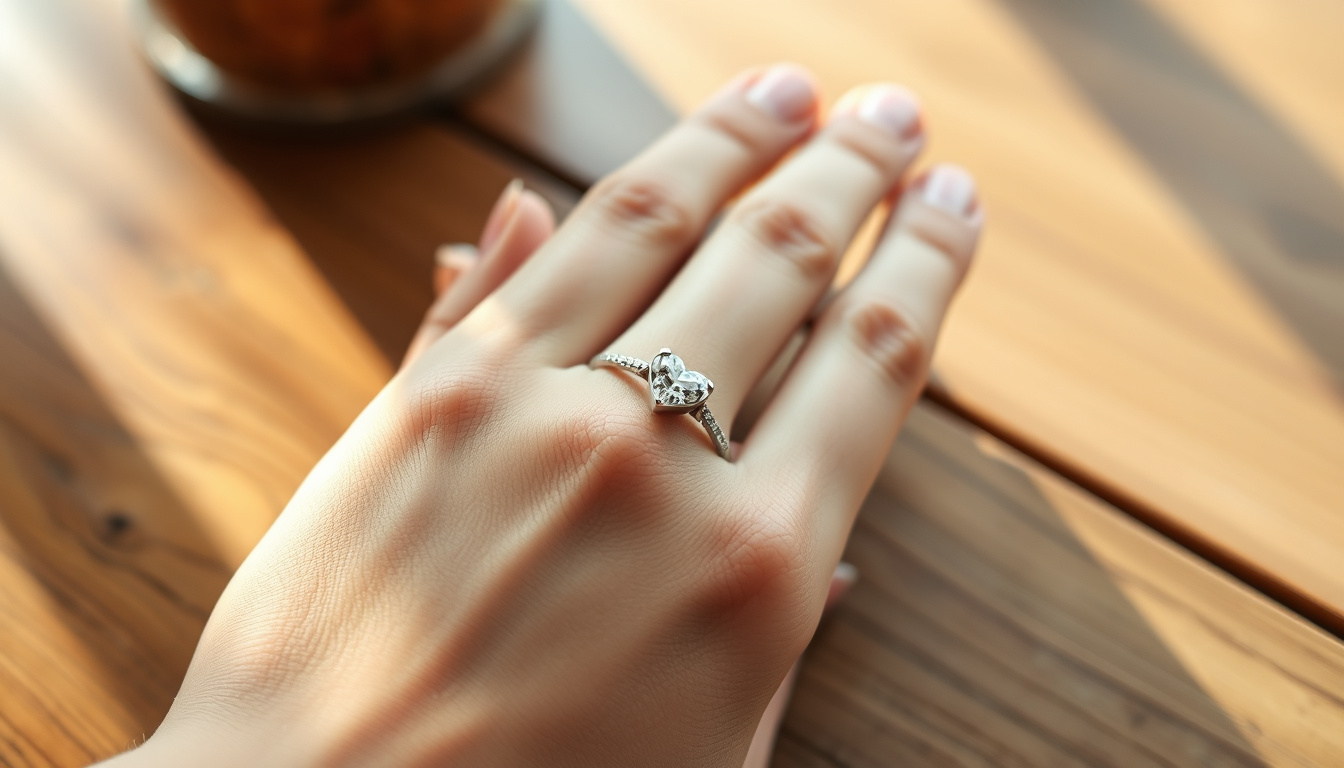
Anyone who has ever been handed a small ring box knows the question that arrives with it: what, exactly, is this promising? A promise ring is less formal than an engagement ring but far from a casual gift, which is exactly why the rules feel so fuzzy.
Traditional promise ring finger: Left ring finger ·
Formality vs engagement ring: Less formal ·
Place in relationship timeline: Before engagement ·
Common giving pattern: One partner to another or chosen together
Quick snapshot
- A promise ring commonly signifies commitment, loyalty, devotion, or a serious relationship (Bevilles, Australian jeweller)
- A promise ring can be read as a pre-engagement ring, but it does not lock in a proposal date (Shiels, Australian jeweller)
- An engagement ring signals intention to marry, while a promise ring has a broader, more individual meaning (Glamira Australia, online jeweller)
- Ring placement alone cannot reliably establish whether someone is engaged (Michael Hill Australia)
- A promise ring has no fixed legal or universally recognised relationship status in Australia (Shiels) (Michael Hill Australia)
- The right timing is personal: a milestone, time apart, or a decision to get more serious can all trigger the ring (Glamira Australia) (Michael Hill Australia)
- After engagement, moving the promise ring to the right hand is a described practice, not a universal rule (Michael Hill Australia) (Nina’s Jewellery, Australian retailer)
- A promise ring may be given by one partner, worn by both, or used to mark a shared commitment (Nina’s Jewellery, Australian retailer)
- Some people wear a promise ring on a chain around the neck instead of on a finger (Simon Curwood Jewellers, Australian fine jeweller)
- A promise ring does not necessarily mean a proposal or marriage is imminent (Shiels)
- Some Australian jewellers recommend the right-hand ring finger when the wearer wants to avoid confusion with an engagement or wedding ring (Bevilles)
- Both partners can wear the ring as a shared symbol (Nina’s Jewellery)
Eight quick facts, one pattern: promise rings are defined by flexibility, not by a single national rule.
| Fact | What it means |
|---|---|
| Symbol | Commitment, loyalty, devotion |
| Formality | Less formal than an engagement ring |
| Usual sequence | Promise ring before engagement ring |
| Common finger | Left ring finger, but not required |
| Legal status | No fixed legal relationship status in Australia |
| Design | Often simpler, but with no mandatory difference |
| After engagement | Some couples move it to the right hand |
| Retail context | National chains and online jewellers in Australia |
What is the symbol of a promise ring?
A promise ring is a communication tool before it is a piece of jewellery — the metal matters less than the sentence that comes with it.
Strip away the marketing and the definition stays consistent: a promise ring is a symbol of commitment to someone special. It lands between a casual gift and a proposal — a physical way to say “this relationship is going somewhere.” Jewellers have an incentive to keep the category distinct: a promise ring that looks like a miniature engagement ring defeats its own purpose, which is why the clearest retailers explain the difference on the page.
What does a promise ring represent?
- Romantic commitment, fidelity, shared goals, or a future intention — the four readings Glamira Australia (online jeweller) attaches to the category.
- A shared decision: the ring can be given by one partner or chosen together to mark a commitment both people own.
- Not a marriage proposal: the conventional meaning is broader than “marry me.”
Notice what is missing from that list: no fixed promise to marry. The same ring that reads as pre-engagement for one couple reads as a milestone marker for another. That is why the same design can appear in very different relationships — the symbolism is decided by the conversation, not by the band.
How formal is a promise ring?
The formality range is wide: a promise ring can be a quiet “I choose you” or a deliberate pause before engagement — both are legitimate uses.
Traditional promise rings were given ahead of an engagement ring, which is why many people still treat them as engagement-adjacent. But Australian jewellers describe the category as more flexible than that: the ring does not carry a fixed legal or universally recognised relationship status, and it does not lock in a proposal date.
The implication: if you cannot explain what the promise is, the ring will be read as a vague and possibly misleading signal. Name the promise, and the formality level stops mattering.
Which finger do you put a promise ring on?
What is the most common promise ring finger?
- The left-hand ring finger is one of the most common placements (NAJO, Australian jewellery brand).
- The right-hand ring finger is recommended by some Australian jewellers when the wearer wants to avoid confusion with an engagement or wedding ring.
- A middle finger, another chosen finger, or a chain around the neck are all workable alternatives.
The left ring finger is the default because it is the finger everyone already associates with rings of commitment — the same spot where engagement and wedding rings usually sit. That visibility is exactly why some people choose the right hand instead: to signal “committed, not engaged yet.”
A left-hand ring-finger promise ring will be read as an engagement ring by a large share of the people who see it. If you are not ready for that conversation, the right hand or a necklace avoids the assumption.
Can you switch fingers later?
- Some couples move the promise ring to the right hand after engagement.
- Some move it to a chain around the neck and let the engagement ring take the lead.
- Others keep both rings on the same hand — there is no rule that forces a switch.
The practical test is visual: put the ring where it reads as the promise it makes. If the promise is “we are heading toward engagement,” the left ring finger is fine. If the promise is “we are committed right now, without a wedding date,” the right hand or a necklace keeps the message accurate. When you buy in-store, try the ring on the actual finger you plan to use — the same size can differ between hands.
The pattern: there is no wrong finger — only ambiguous ones. Choose the placement that does not contradict the words you used when you gave it.
Is a promise ring a big deal?
Why would a guy give a girl a promise ring?
- To make exclusivity visible — a public “we are serious” marker.
- To bridge distance — a tangible commitment during time apart.
- To take a step toward engagement without proposing.
- To mark a shared commitment the couple chose together.
The common thread is intent. A promise ring signals genuine commitment, but it does not carry the same social weight as an engagement ring. It is a deliberate step, not the destination — and the motive matters less than the clarity of the message that comes with it.
What makes a promise ring different from a casual gift?
The same budget that buys a “nice gift” can buy a promise ring — but the ring converts the gift into a statement both of you will re-read for years.
A gift says “I thought of you.” A promise ring says “I am choosing you, and I want the choice on record.” The difference is entirely in the words and the occasion. Since a promise ring has no fixed legal status, the intent depends on what both of you actually say — which is why the giving moment matters more than the design.
Upsides
- Makes a commitment explicit without requiring a proposal.
- Works for relationships of different shapes, including long-distance and shared decisions.
- Design and budget are flexible; there is no diamond expectation.
Downsides
- Can be mistaken for an engagement ring, especially on the left ring finger.
- Has no fixed legal meaning, so the intent depends entirely on the conversation.
- Creates pressure if the two of you have not agreed on what the ring promises.
What this means: a promise ring is as big a deal as the conversation that comes with it. Without that conversation, it is just a ring with good intentions.
How long should you date before a promise ring?
What is the 3 month ring rule?
- The 3-month ring rule comes from dating culture, not from jewellery-industry standards.
- No Australian jeweller we reviewed ties a promise ring to a mandatory waiting period.
The rule gets passed around as a neat milestone: three months is when you should know whether the relationship has long-term potential — and, in some versions, when a ring should mark it. But there is no single authoritative source for the rule, and no jeweller’s guide we reviewed codifies it.
What is the 3 6 9 month rule in dating?
- A pattern that floats through dating conversations: check the relationship at three months, again at six, and again at nine.
- No single agreed definition exists — versions differ on what is supposed to happen at each checkpoint.
- Nothing in the Australian jewellery sources we reviewed treats it as a trigger for buying a ring.
The 3-6-9 pattern is a heuristic, not a schedule. Some couples reach clarity faster; some take longer. The pattern does not know your relationship, and treating it as a deadline creates pressure instead of communication.
Is 3 months too early for a promise ring?
At three months, the question is not “are we ready for a ring?” — it is “can we say out loud what this ring would mean?” If you cannot, the ring is too early. If you can, the calendar is irrelevant.
Six relationship checkpoints, one pattern: the ring appears when the couple’s own timeline says so — not when a dating-forum rule says so.
| Checkpoint | What it typically means |
|---|---|
| 0–3 months | Getting to know each other; a promise ring is usually premature. |
| 3 months | Popular culture references a “3-month ring rule,” but it is not a formal requirement. |
| 3–6 months | Some couples start discussing commitment; the 3-6-9 dating rule is not standardised. |
| 6 months | A common checkpoint; some couples exchange promise rings around this time. |
| 9 months | A later checkpoint in the 3-6-9 dating pattern. |
| Before engagement | The promise ring is traditionally given as a precursor to an engagement ring (Nina’s Jewellery) |
The pattern across all six checkpoints is the same: the ring follows a decision, not a date. A promise ring at three months can be entirely reasonable if the commitment conversation has already happened; at twelve months it can be a mistake if it has not. Before you buy, settle four things: the timeline you both imagine, the budget, whether one ring or two is the plan, and what happens if the relationship changes.
Why this matters: relationship readiness matters more than the number of months — and readiness is something you discuss, not something you wait for.
What are some good brands of promise rings?
Pandora promise rings
In Australia, the promise-ring category is a mainstream retail category, not a niche: national chains, international brands, and specialist online stores all run dedicated collections.
Pandora’s promise ring collection is framed around the traditional idea of a promise ahead of engagement — the brand describes the ring as a symbol of commitment given before an engagement ring. The range is positioned as an accessible entry point to commitment jewellery rather than a formal proposal piece.
Michael Hill and Prouds promise rings
- Michael Hill Australia runs a dedicated promise-ring collection inside its engagement category.
- Prouds is one of the Australian retail names shoppers regularly surface when searching the category.
- Both are mainstream chains, which makes promise rings easy to see and try in person.
Michael Hill’s promise-ring page is useful even before you shop: the retailer is explicit that there is no one required finger for the ring and that customs are flexible. That clarity helps first-time buyers who are nervous about getting the rules wrong.
Swarovski and specialty promise ring retailers
A promise-ring page that explains the ring’s meaning is more useful than one that only shows stones. The Australian retailers with the clearest guides treat promise rings as a category with its own etiquette.
Swarovski is a commonly searched promise-ring brand in Australia and offers a crystal-led alternative to gold and diamond styles. Specialist retailers such as Argyle Jewellers also appear in Australian search results, and The Promise Co leans into the occasion — its top-selling promise ring collection ships with luxury packaging and a promise card.
Whichever brand you choose, the practical filter is the same: does the retailer explain the difference between a promise ring and an engagement ring? Michael Hill, Bevilles, and Shiels all publish clear explanations, which makes them useful starting points even if you buy elsewhere. Look for everyday-wear designs, straightforward resizing policies, and a care plan for daily use.
- Does the page separate promise rings from engagement rings?
- Does the range include styles beyond diamond solitaires?
- Does the retailer explain sizing, resizing, and returns clearly?
- Is there a warranty or care policy for daily wear?
The pattern: in Australia, brand matters less than clarity. A retailer that explains the promise is already helping you make it.
What comes next after a promise ring?
Promise ring vs engagement ring
- The core difference is the message: a promise ring says “I’m committed”; an engagement ring says “let’s get married.”
- A promise ring can mean many things; an engagement ring has one conventional job.
- Designs can overlap — a diamond promise ring can look very close to an engagement ring.
Four contrasts, one pattern: the line between promise and engagement is drawn by conversation, not by the ring itself.
| Promise ring | Engagement ring | |
|---|---|---|
| Core message | Commitment with an individually defined meaning | Intention or agreement to marry |
| Formality | Less formal; no proposal required | Public marker of a marriage plan |
| Finger | Left ring finger common; right hand or necklace work too | Left ring finger by convention |
| Design | Often simpler; no mandatory design difference (Simon Curwood Jewellers, Australian fine jeweller) | Usually built around a centre stone |
| Status | No fixed legal relationship status in Australia | Conventionally a marriage step |
Notice what the table does not say: nothing in the promise-ring column requires a different stone, a different budget, or a different hand. The two categories run on the same materials and the same jewellers — what separates them is the sentence spoken when the ring is given.
How does a promise ring lead to the next step?
- The next step is usually a conversation about engagement, not an automatic proposal.
- Some couples later move the promise ring to another finger or continue wearing it after engagement.
- The promise ring’s job is to make the commitment legible before an engagement ring takes over.
The healthiest sequence is usually: promise ring, then conversation, then engagement ring. The ring creates the vocabulary; the conversation fills it with meaning. Couples who skip the conversation tend to discover the mismatch only when someone asks to see “the ring.” If someone asks whether it is an engagement ring, the honest answer is short and calm: “No, it’s a promise ring — we’re not engaged yet.” The more comfortable you are with that sentence, the less the ring will be misread.
Why this matters: a promise ring that has done its job makes the eventual engagement conversation calmer — because the “are we heading there?” question was already answered.
What to say to a girl when giving a promise ring?
Do you get down on one knee for a promise ring?
Kneeling is optional. A promise ring is a conversation, not a proposal scene — and kneeling can turn a flexible commitment into something that looks like a marriage ask.
The gesture should match the promise. If you kneel, you borrow the visual language of a proposal — and the moment reads as one, even if that was not the intent. If you are giving a pre-engagement ring and a real proposal is part of the plan, kneeling can be sweet, but say the word “promise,” not “will you marry me.”
What are good phrases for giving a promise ring?
Rehearsed lines feel safe but sound borrowed. The line that lands names the actual promise and the future it points to.
The message should explain the ring’s meaning without promising marriage. Borrow words that match the promise you are actually making — commitment, loyalty, devotion, or a serious relationship — and say where you see the relationship going.
- Name the promise first: “I’m not proposing — I’m telling you I’m all in.”
- Say what the ring means to you: “Every time you see this, you’ll know I chose you.”
- Separate it from an engagement: “This is a promise ring. The proposal can wait until we’re both ready.”
- Make room for a response: “You don’t have to answer now — I wanted you to know where I stand.”
- If you chose it together, say so: “We picked this together because this promise belongs to both of us.”
- Don’t say “this is basically an engagement ring” — it erases the distinction you just created.
- Don’t hand it over in silence — the ring needs a sentence to attach to.
- Don’t lead with “I hope this isn’t too fast” — it makes the promise sound apologetic.
A personal statement about the relationship lands better than a generic line. Reference a shared memory, a future plan, or the specific reason this moment matters — that is the part no shop-bought wording can replace.
What this means: the words do the work the ring cannot. If the sentence is clear, the ring is a keepsake; if it is vague, the ring becomes a test everyone reads differently.
What’s confirmed, what’s still unclear
Confirmed facts
- A promise ring is a symbol of commitment to someone special (Bevilles, Australian jeweller).
- Promise rings are less formal than engagement rings and can represent commitment, fidelity, shared goals, or a future intention (Glamira Australia).
- There is no universally required finger or hand for a promise ring (Michael Hill Australia).
What’s still unclear
- The exact origin of the “3-month ring rule” is not documented in the jeweller guides we reviewed.
- The 3-6-9 month dating rule has no single agreed definition.
- Whether three months is too early depends on the relationship, not a universal standard.
- Whether to kneel — or which finger to choose — is personal preference, not protocol.
The pattern: the clearer the couple is about intent, the fewer of these open questions actually matter.
What the sources say
The left-hand ring finger is one of the most common placements for a promise ring.
NAJO (Australian jewellery brand)
Promise rings are often simpler in style than engagement rings, although there is no mandatory design difference.
Simon Curwood Jewellers (Australian fine jeweller)
What this means: even the most practical details — the finger, the style — come back to the same idea: the message should fit the relationship, not a template.
A promise ring earns its name only when the promise is spoken. For couples in Australia, the choice is clear: say what the ring means before you give it, or watch it be read as a question rather than a commitment. The ring will wait; the clarity will not arrive on its own.
Frequently asked questions
How much should you spend on a promise ring?
There is no fixed budget rule. Because promise rings are less formal than engagement rings, many couples spend well below an engagement-ring budget; the conversation about intent matters more than the carat total.
Do promise rings have to include diamonds?
No. Promise rings can be plain metal bands, gemstone styles, or diamond-set designs — there is no mandatory design difference between a promise ring and an engagement ring.
Can a promise ring be worn every day?
Yes, if the design fits your lifestyle. Many people wear promise rings daily; others choose a necklace chain for work or active lifestyles.
Can you wear a promise ring on a necklace?
Some Australian jewellers describe the necklace as a normal alternative to the finger, which is also a practical option for people who do not wear rings at work.
Are promise rings only for women?
No. A promise ring can be given by one partner, worn by both partners, or chosen together as a shared commitment symbol.
Should you give a promise ring on a specific date?
Only if the date means something to the relationship. Anniversaries, departures for long-distance periods, and milestone moments are common choices, but the ring works best when the timing follows a decision you have already made.
Related reading: Esther Perel: Theory, Quotes, and Relationship Advice · Aristotle Onassis: Life, Love, Legacy and the Jackie Kennedy Marriage
Related stories





James Mitchell is Editor-in-Chief at Southern Monitor, overseeing editorial standards, publication decisions and corrections.