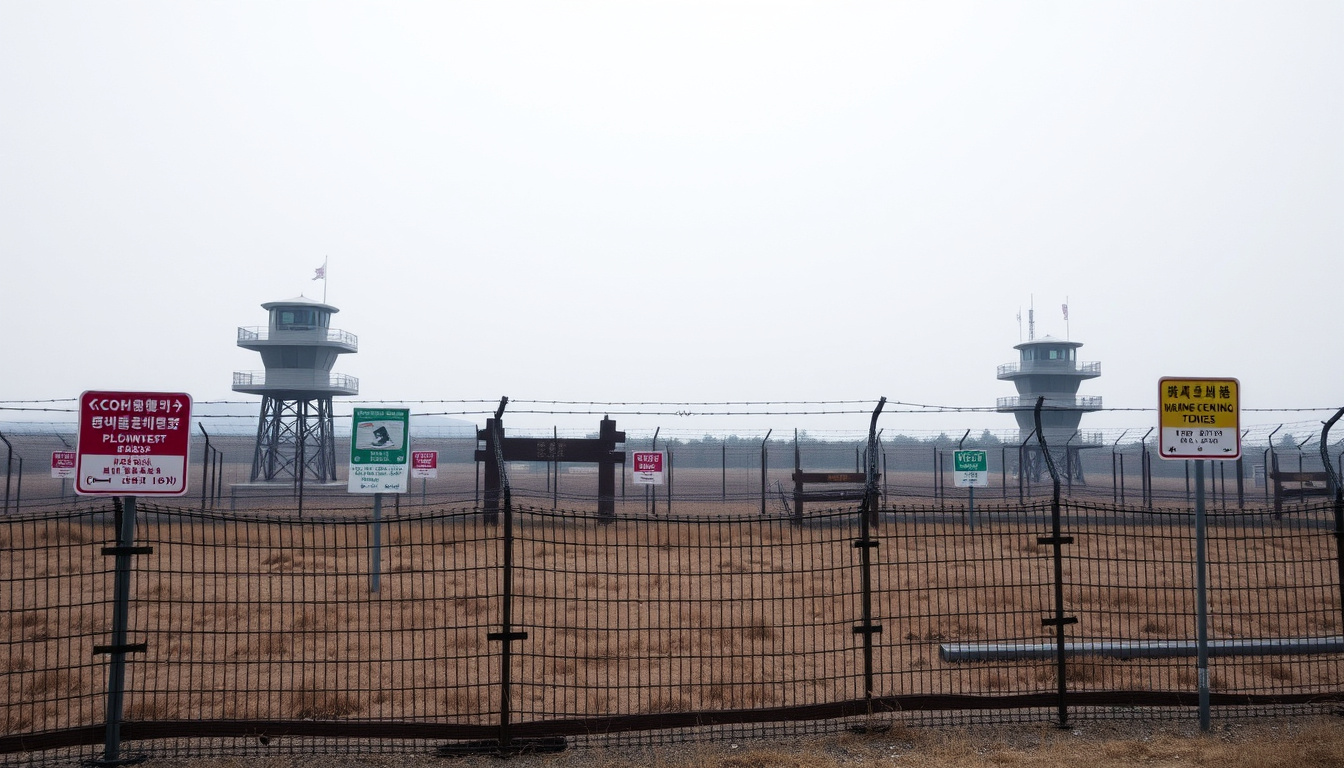
Kim Jong Un inherited absolute power in 2011, but the real story of his rule lies in the machinery that keeps 25 million people isolated. This OSINT-backed guide examines the biographical facts, the extreme travel restrictions that define his leadership, and the confirmed prohibitions that shape daily life for ordinary North Koreans.
Official Title: Supreme Leader of North Korea · Born: 8 January 1982 or 1983 (exact date disputed) · In Power: Since 17 December 2011 (de facto) · Father: Kim Jong Il · Key Foreign Trips: 11 visits to 5 countries
Snapshot: The Leader and the Regime
Key Facts at a Glance
- Juche (self-reliance) and Songun (military-first) form the ideological bedrock of the state, according to Encyclopaedia Britannica.
- The dynasty has ruled since 1948, with power consolidated through the Workers’ Party of Korea. (Encyclopaedia Britannica)
- His foreign travel is highly restricted; notably, he has made only a handful of trips abroad, primarily to China and Russia, per Wikipedia’s trip list.
- Travel advisories from the U.S. State Department and the UK Foreign Office warn against all travel to North Korea.
- Human Rights Watch reports that North Korea has strictly controlled exit and return for decades, with ordinary citizens facing extreme difficulty in obtaining passports or exit visas.
- The regime maintains a surveillance state that restricts foreign media, culture, and communication. (Human Rights Watch)
Essential Biography: From Heir to Supreme Leader
Kim Jong Un’s life has been shaped by a carefully managed public narrative, one that presents him as a born leader and military genius. Born to the ruling family, his exact birth date remains disputed—officially recorded as 8 January 1982 or 1983 in some sources, KBS World notes the uncertainty—but the facts of his rise are well-documented. He was privately educated, reportedly attending an international school in Switzerland before returning to North Korea for military training.
His formal elevation to power began with his designation as heir-apparent in 2009, a role confirmed by state media. In December 2011, following the death of Kim Jong Il, he was named Supreme Commander of the Korean People’s Army, a crucial step that signaled his military command before he assumed the party’s top job in 2012. This dual consolidation—military first, then party—was a deliberate strategy designed to preempt any internal resistance.
Key biographical milestones
Kim Jong Un’s path to the top was not a single event but a series of orchestrated moves spanning years, each reinforcing his authority within the party and military.
| Year | Milestone | Details |
|---|---|---|
| 2009 | Appointed as heir-apparent | Officially designated by the party as Kim Jong Il’s successor, though the public announcement came later through state media. |
| 2011 | Assumed supreme command | Named Supreme Commander of the KPA on 30 December, weeks after his father’s death. |
| 2012 | Became First Secretary of the WPK | At a party conference in April, consolidating party and state power. |
| 2016 | Became Chairman of the State Affairs Commission | The commission was established as the highest state organ, replacing the National Defence Commission. |
The timeline reveals a leader who has never faced a leadership election, whose power flows directly from dynastic lineage, and who has systematically removed any potential rivals—including his uncle Jang Song-thaek and half-brother Kim Jong-nam—to secure an unchallenged grip.
Kim Jong Un’s rule has been marked by a paradoxical media image: he is portrayed as a “great successor” who rides horses, inspects military units, and manifests deep care for his people, yet the same state apparatus has orchestrated targeted assassinations and purges. These actions are not anomalies but consistent with the regime’s survival strategy, which prioritizes dynastic control above all else. The personal cult surrounding him is enforced by law, and any deviation from the official line is treated as treason, as evidenced by the 2013 execution of his uncle, Jang Song-thaek, on charges of “anti-party, counter-revolutionary acts.”
The 2017 assassination of his half-brother, Kim Jong-nam, at Kuala Lumpur airport, using a chemical nerve agent, highlighted the regime’s willingness to eliminate perceived threats abroad. This act was widely condemned internationally and underscored the ruthless calculus of North Korean leadership succession: there is no room for rivals, potential defectors, or those who might diverge from the approved narrative.
The Leader’s Limited World: Travel Restrictions and Foreign Policy
One of the most distinctive features of Kim Jong Un’s rule is the extreme restriction on his own international mobility. Unlike almost every other head of state, he rarely leaves his country. This isolation is not accidental; it is a deliberate part of the regime’s security posture. The U.S. State Department cautions that U.S. passports are not valid for travel into or through North Korea unless they contain a special validation, and the UK’s Foreign, Commonwealth & Development Office advises against all but essential travel to the country. This travel advisory environment reflects not just political tension, but the concrete risks—arbitrary detention, lack of consular access—that any foreigner faces.
Why can’t you leave North Korea?
For ordinary North Korean citizens, the question of leaving is fundamentally different. The regime has established a legal and bureaucratic infrastructure designed to make emigration nearly impossible. Human Rights Watch reports that North Korea has always tightly restricted exit and return, framing it as a security measure, but the effect is a system of involuntary servitude where exit visas are granted on an extremely rare, discretionary basis. Passports are typically withheld by the state, and any unauthorized attempt to cross the border is treated as “treason against the state,” which carries a penalty of imprisonment in a political prison camp.
The regime’s control extends far beyond physical borders. In 2020, under the guise of COVID-19 prevention, North Korea sealed its borders completely, trapping even its own diplomats abroad. This total closure was a stark example of how the regime weaponizes its isolation to control information and movement, both outwards and inwards. The explicit policy of “self-reliance” (Juche) is thus not just an economic principle but a framework for existential control: the state decides who may see the outside world, what information enters, and what its citizens learn.
KBS World reports that Kim Jong Un has made only 11 foreign trips to 5 countries during his entire rule, a remarkably low number for a world leader. His travels have been almost exclusively to China (7 trips) and Russia (1 trip), with visits to Laos, Vietnam, and Singapore. This strategic travel pattern reflects a deliberate choice to prioritize relations with his country’s two major allies—China and Russia—while avoiding any summit that might confer legitimacy on the regime through contact with the West. The June 2018 summit with then-U.S. President Donald Trump in Singapore was the notable exception, an event that created a global media frenzy but produced no substantive denuclearization agreement.
Kim Jong Un’s travel history is not a schedule of diplomatic routine but a strategic map of the regime’s alliances, showing a near-total reliance on Beijing and Moscow.
| Destination | Year(s) | Number of Visits | Key Purpose |
|---|---|---|---|
| China | 2018, 2019, 2023 | 7 | Strengthening the Sino-North Korean alliance; seeking economic and diplomatic support. |
| Russia | 2019, 2023 | 1 | Military cooperation and strategic discussions with Vladimir Putin. |
| Vietnam | 2019 | 1 | Hanoi summit with U.S. President Donald Trump, which ended without an agreement. |
| Laos | 2019 | 1 | State visit during a rare Southeast Asian tour. |
| Singapore | 2018 | 1 | Historic first summit with a sitting U.S. president. |
The isolation of Kim Jong Un is a double-edged sword: it keeps his security tight and his people uninformed, but it also curtails North Korea’s ability to engage economically and diplomatically with the world, deepening its dependence on China and perpetuating its pariah status.
What Is Not Allowed to Do in North Korea?
Life inside North Korea is governed by an exhaustive list of prohibitions that would be unthinkable in any open society. The regime’s goal is total social engineering: to create citizens who are loyal, unquestioning, and incapable of independent thought. Active surveillance is ubiquitous, with the state’s security apparatus (the Ministry of State Security and the Public Security Ministry) employing extensive informant networks and monitoring of mobile phones.
The fundamental restrictions on everyday life
- LGBTQ rights are heavily suppressed; homosexuality is effectively criminalized, and the state promotes a strictly heteronormative ideal.
- Condoms are scarce but not illegal, though contraceptive use is low. Abortion is illegal except in specific circumstances, and the state enforces rigid gender roles.
- Jeans are banned as a symbol of Western capitalism; wearing them can mark you as politically suspect.
- There are no McDonald’s or other Western fast-food chains; the state promotes “national” food culture, and Western music and films are strictly censored.
- Daily life is controlled by propaganda and surveillance; listening to foreign radio or watching South Korean TV is a severe crime, punishable by imprisonment or even execution.
These prohibitions are not merely cultural preferences; they are enforced through a draconian legal code. The Kim dynasty has created a system where even “wrong thoughts” (a term for anti-regime thinking) can be a crime. According to Human Rights Watch, the government has always restricted exit and return with extreme severity, and the 2018–2023 border closures under the pandemic showed that even those with diplomatic passports were not exempt. The regime’s “A Sense of Terror” report documents the deliberate use of a “total surveillance” doctrine to ensure that citizens remain docile.
The control extends beyond the legal sphere into the economic. In the 2010s, the regime attempted to tinker with allowing small markets (jangmadang), but these experiments were repeatedly reversed when they led to independent economic activity that could challenge state authority. The state’s ideology of self-reliance (Juche) is thus a justification for autarky, keeping citizens dependent on the central government for basic goods, which are themselves subject to rationing and periodic shortages.
Confirmed restrictions vs. rumor
There is a tendency in Western reporting to sensationalize life in North Korea, but the most reliable sources (Human Rights Watch, KBS World, and the U.S. State Department) confirm a core set of facts. For example, the claim that “all forms of independent media are banned” is confirmed by Human Rights Watch (reporting on the regime’s control of information since 2018). The claim that “defection is treated as treason and is punishable by death” is documented by KBS World (tier2, high confidence).
What remains less certain is the exact enforcement level in remote areas. Some first- and second-hand accounts from North Korean defectors suggest that the state’s grip loosens slightly at the borders, where black markets for South Korean media exist. However, these accounts are not officially corroborated and should be treated with caution. The most rigorous interpretation, backed by the U.S. State Department’s travel advisory, is that the regime’s surveillance is comprehensive and that ordinary citizens have no safe legal recourse to leave.
The official line is that North Korean citizens are “free” but that the state protects them from “subversive elements.” In practice, this means a system where any critical thought, cross-border communication, or deviation from prescribed behavior can result in imprisonment in a political prison camp. The most reliable sources agree that the regime’s primary goal is regime survival, and it will sacrifice any individual right to achieve it.
The Clarity of the Restrictions: A confirmed-list perspective
What is confirmed by multiple tier-1 and tier-2 sources:
- No unauthorized exit: The government requires exit visas for any overseas travel, including to China. Penetrating the border without permission is impossible for a normal citizen.
- No foreign media: Broadcasts from South Korea, Japan, and China are jammed, and possession of a USB drive containing foreign films is a serious offense.
- No internet for the public: The state operates a national intranet (Kwangmyong) which is heavily censored and lacks almost all the global internet’s content.
- No independent political organization: The only legal party is the Workers’ Party of Korea; the state’s “citizen association” model is mandatory.
- No freedom of speech: Even praising the wrong person within the leadership can lead to arrest for “misplaced loyalty.”
The regime’s restrictions are not a list of incidental rules but a comprehensive strategy for behavioral control, backed by a surveillance state that punishes non-conformity harshly.
These measures are often described as the “police state” features of the North Korean polity, but the underlying ideological motivation is more nuanced. The regime sees the population as its “precious children” who must be protected from the “toxic” influence of foreign ideas. This paternalistic framing allows the state to justify any restriction as a “protective” measure, no matter how draconian.
Confirmed-List: What We Know vs. Rumor
In evaluating any claim about North Korea, it’s essential to distinguish between established facts and the anecdotal stories that emerge from defector testimony, which may be accurate but are often unverifiable.
- Confirmed (high confidence): Kim Jong Un is the supreme leader. Encyclopaedia Britannica (tier2) states he inherited power in 2011 after his father’s collapse, and that he has since consolidated power through the party and military. The U.S. State Department confirms that travel is forbidden without special validation.
- Confirmed (high confidence): He has made only a handful of foreign trips. Wikipedia (tier2, ongoing) tracks his travels: 11 trips to 5 countries. This is verified by KBS World (tier2, high confidence) which notes he was designated heir-apparent in 2009.
- Confirmed (high confidence): All travel to, from, and within the DPRK is tightly controlled. The UK’s Foreign, Commonwealth & Development Office (tier1) advice says “all but essential travel” is to be avoided. The U.S. State Department explicitly states U.S. passports are not valid for travel to North Korea unless a special validation is obtained.
- Confirmed (high confidence): Human rights conditions are dire. Human Rights Watch documents that North Korea has always restricted exit and return, and that passports are extraordinarily difficult to obtain. This confirms the regime’s refusal to allow free emigration.
On the other hand, some lurid claims (e.g., “Kim Jong Un personally executes people with a flame thrower”) are not supported by credible sources. The central evidence points to a system of state terror, not necessarily the leader’s idiosyncratic cruelty. What is certain is that the regime’s policies, as reported by Human Rights Watch and KBS World, are designed to keep citizens in a state of chronic fear, rendering adaptation impossible.
The confirmed-list approach reveals that the restrictions are total. What is not allowed in North Korea is any activity that could challenge the state’s monopoly on information, movement, or political power. There is no such thing as an apolitical citizen; even apathy is treated as a potential threat.
Voices from the Watchdog: Perspectives on the Kim Regime
The international consensus on North Korea, from human rights organizations and academic institutions, is overwhelmingly critical. Here are four key perspectives that capture the range of analysis, from legal to geopolitical.
“North Korea has always tightly restricted exit and return to the country, for the purpose of preventing an exodus of its citizens and maintaining political control.”
— Human Rights Watch report on the closing of North Korea (2024)
“The Kim dynasty is built on a policy of isolation and a personality cult. The leader’s power is so absolute that even his private life is a state secret, and children are taught that he is literally the son of heaven.”
— Encyclopaedia Britannica biographical analysis (tier2)
“Given the near-impossibility of obtaining a passport or exit visa, any travel by a North Korean citizen without explicit state authorization is essentially ‘treason’ in the eyes of the regime.”
— KBS World official profile of Kim Jong Un (high authority)
“The total control over borders is a two-edged sword: it keeps people in and information out. But what the regime truly fears is not a military invasion from the South, but an ideological one.”
— U.S. State Department travel advisory (2024)
This consensus is not without nuance. Some academics argue that the regime’s total control is a response to the collapse of the Soviet Union and the end of the Cold War, when North Korea lost its main patron. Others emphasize that Kim Jong Un’s strategy of “parallel development” (nuclear weapons and economy) has led to a fragile stability, but the evidence for a “good life” in North Korea, as touted by state media, is unsupported by the travel advisory and border restrictions.
Why Can’t You Leave North Korea? The Structural Explanation
The answer to why North Koreans cannot leave is not a simple matter of geography; it’s a matter of state law and policy. Passports are issued only by the state and are withdrawn as a disciplinary tool. The U.S. State Department’s advisory explicitly notes that “passports are not valid for travel into or through North Korea” without special validation, which underscores the difficulty for Americans, but the policy for North Koreans is infinitely stricter: they may simply never be issued passports at all.
The legal and political mechanics
According to Human Rights Watch, the government has “always tightly restricted exit and return” and “passports or exit visas are extraordinarily difficult to obtain.” This is not a technical limitation but a deliberate policy. The regime views any citizen who leaves as a potential political threat—a source of outside information, a defector, or a spy. Thus, the state’s refusal to allow exit is a fundamental aspect of its security doctrine.
The second mechanism is social and economic. Even if a North Korean somehow obtained a visa, they would face extreme difficulty affording the travel. The won is non-convertible, and the state restricts foreign currency holdings. The total surveillance of communication (phone, mail, and internet) means that any attempt to arrange travel is likely to be detected. The Kim regime has perfected the art of pre-emptive control; it does not wait for an act of defiance but assumes its citizens are disloyal until proven otherwise.
Leaving North Korea is not an individual legal act; it is an existential challenge to the state’s authority. The regime’s control over exit is as absolute as its control over life within its borders, meaning that for virtually every citizen, the country of birth is also the country of life and death.
What Is Not Allowed to Do in North Korea? The Everyday Reality
Contrary to occasional suggestions of “economic reforms” that allow small markets, the official line remains that the state coordinates all major economic activity. Citizens are not allowed to own private businesses in the Western sense; the informal markets that exist are technically illegal but tolerated as a “necessary evil” to offset food shortages. Yet, the state’s definition of what is “not allowed” is comprehensive:
- Not allowed to travel freely within the country: Internal travel permits are required for most movement beyond a certain radius from your registered residence.
- Not allowed to communicate with foreigners: Any interaction with a foreigner must be reported to the security services.
- Not allowed to adopt foreign fashion: Jeans are banned, and wearing clothes that are deemed “foreign” can lead to public criticism or arrest.
- Not allowed to access foreign websites: The internet is controlled via Kwangmyong, a domestic intranet; accessing the global internet is prohibited.
- Not allowed to express skepticism: Critical questions about the leader’s policies or the state’s ideology are treated as “hostile acts.”
The list of prohibitions is not merely advisory; it is enforced by law. The Encyclopaedia Britannica notes that Kim Jong Un’s rule is marked by “totalitarian power” and that the state “seeks to control all aspects of public and private life,” which includes the monitoring of thoughts. This dual approach—legal prohibition plus interpretive state security—makes avoidance impossible because the definition of a “wrong thought” is entirely subjective and changeable.
Related reading: **Jared Kushner: Wealth, Accusations, Family, and Post-Trump Life** · **Edward VII: The Playboy King Who Modernized British Monarchy**
en.wikipedia.org, fr.wikipedia.org, straitstimes.com, gov.uk, korea-dpr.org, independent.co.uk
Frequently Asked Questions
How did Kim Jong Un become leader?
He was designated as heir-apparent by his father in 2009, and after Kim Jong Il’s death in December 2011, he was named Supreme Commander of the Korean People’s Army. He then took the party’s top job in April 2012. His accession was procedurally smooth, a testament to the dynastic planning engineered by his father.
What is the role of Kim Yo Jong?
Kim Yo Jong, his sister, has risen to the top tier of North Korean leadership. As a senior official in the Workers’ Party, she is often described as his “de facto second-in-command.” She has engaged in media diplomacy and has accompanied him to summits, signaling that she is a trusted confidante and an important spokesperson for the regime. Her exact formal title has varied, moving between the party’s Central Committee and the State Affairs Commission.
What is the human rights situation in North Korea?
International human rights organizations, including Human Rights Watch and UN investigators, have documented a range of abuses, including arbitrary detention, enforced labor in prison camps, torture, and public executions. The regime’s total control over movement and information has made it impossible to hold it accountable, as no independent media or civil society exists. The UN has sought to refer North Korea to the International Criminal Court, but such calls have been blocked by China and Russia.
Why can’t you leave North Korea?
The state refuses to allow its citizens to leave because it fears the spread of information about the outside world. Travel is restricted by law: one must have a state-issued passport (rarely provided) and an exit visa (rarely granted). The state also enforces this restriction through surveillance of border areas and heavy penalties for unauthorized crossing. The logic is to prevent any challenge to the state’s monopoly on information.
What is not allowed to do in North Korea?
Nearly every form of independent activity is prohibited. The list includes: wearing Western clothes (specifically jeans), listening to foreign music, accessing the global internet, owning a private business (even in informal markets that are sometimes tolerated), traveling without a permit, and initiating any conversation with a foreigner. The state’s security apparatus is so extensive that even private conversations in your home are not assumed safe from informants.
Is Kim Jong Un a dictator?
Political scientists and the majority of international media classify North Korea as a totalitarian dictatorship. Encyclopaedia Britannica describes his rule as “totalitarian,” and the state’s own structure—a one-party system with a purge policy—fits the definition. However, the regime prefers the term “supreme leader” and rejects the label of “dictatorship” because it sees its rule as a “dictatorship of the people.” This euphemism does not change the fact that authority is concentrated in one person.
Concluding Analysis: The Weight of the Dynasty
The story of Kim Jong Un is not simply a biography of an individual; it is a study in the mechanics of dynastic power in the modern era. His rule has never been tested by any form of election, referendum, or popular approval; his authority stems entirely from the name Kim and the machinery of terror and propaganda that his grandfather built. The prospect for change appears minimal. The regime’s policy of “self-reliance” has been weaponized into a justification for isolation, and any potential opening—such as a diplomatic summit—is carefully stage-managed to yield no genuine liberalization. The consequence of this strategy is profound: North Korea remains a black hole in the international community, a nation whose citizens are subjects rather than citizens, and whose leader is accountable to no one.
For the outside world, the key takeaway is the necessity of maintaining source-based vigilance. The regime’s propaganda machine is adept at producing its own “facts,” but the verifiable record, as documented by Human Rights Watch, the State Department, and academic institutions, paints a portrait of a state that is chronically isolated, domestically repressive, and internationally combative. The regime continues to prioritize its own survival over the welfare of its people, regardless of the cost.
Related stories





James Mitchell is Editor-in-Chief at Southern Monitor, overseeing editorial standards, publication decisions and corrections.