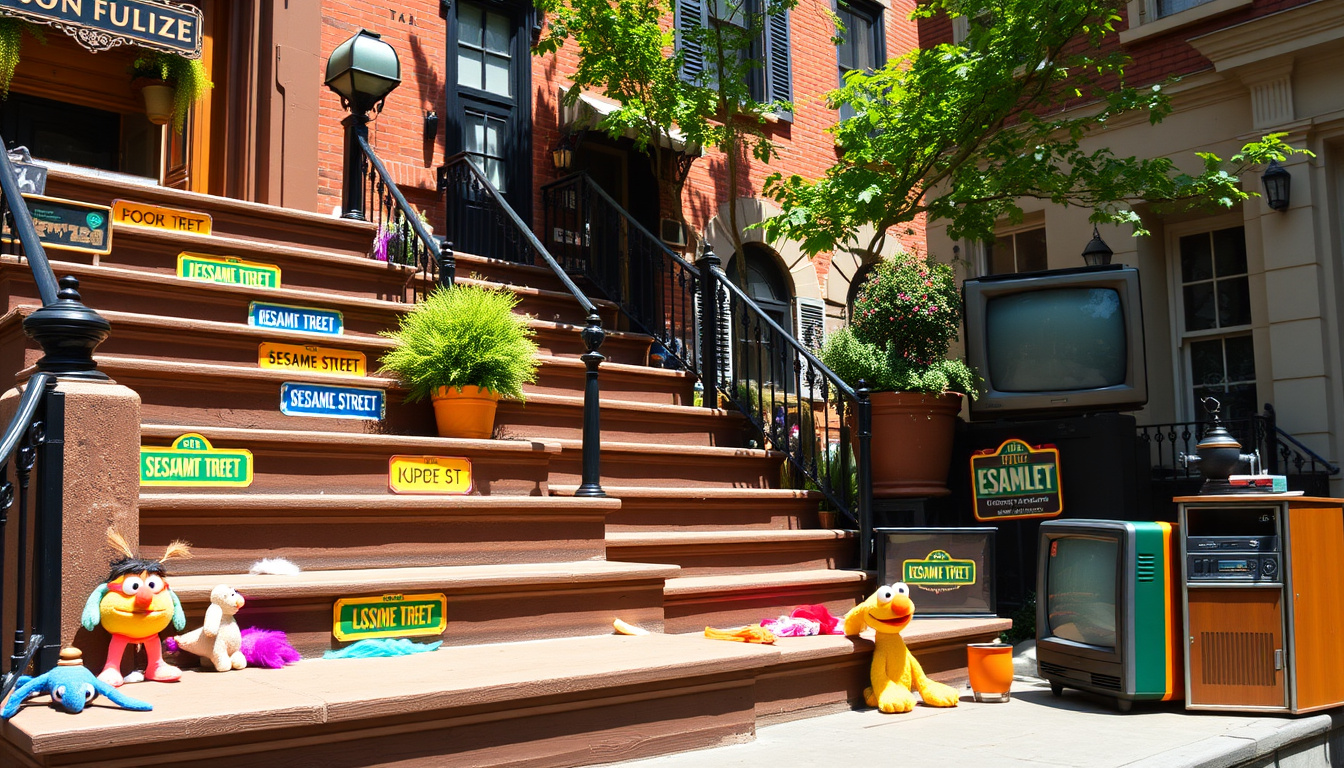

Since its debut in 1969, Sesame Street has introduced generations of children to a colorful cast of characters who blend education with entertainment. The show features an enduring mix of Muppet creations by Jim Henson’s team and human actors who interact with them on screen. Over the decades, the character roster has grown to encompass more than 200 distinct personalities, each designed to teach specific lessons through play and storytelling. This guide provides a comprehensive overview of the show’s most significant characters, their origins, and their roles within this landmark television program.
The characters of Sesame Street span a remarkable range of personalities, backgrounds, and purposes. From the optimistic curiosity of Big Bird to the frantic appetite of Cookie Monster, each character brings something unique to the show’s educational mission. Understanding who these characters are—and how they came to exist—offers insight into why Sesame Street has remained influential for more than five decades.
Whether seeking information about specific characters like Elmo or Big Bird, curious about the human cast members, or interested in how the show has evolved to represent diverse audiences, this article covers the essential facts drawn from verified sources. The information presented here draws primarily from Wikipedia’s comprehensive character listing, Muppet Wiki, and official statements from Sesame Workshop.
Who Are the Main Sesame Street Characters?
The main characters of Sesame Street represent a carefully curated mix designed to resonate with young viewers across cultural and developmental spectrums. The show’s creators deliberately built a cast that combines different personality types, ages, and approaches to learning, ensuring that children can find characters who reflect their own experiences and challenges.
Character Overview
| Character | Type | Personality Trait | Debut Year |
|---|---|---|---|
| Big Bird | Muppet | Friendly, curious, optimistic | 1969 |
| Elmo | Muppet | Curious toddler, enthusiastic | 1980s |
| Cookie Monster | Muppet | Impulsive, passionate about food | 1969 |
| Oscar the Grouch | Muppet | Sarcastic, grumpy but lovable | 1969 |
Key Facts About Sesame Street Characters
- The show has introduced more than 200 characters since its launch in 1969
- Characters include both Muppets created by Jim Henson’s team and human cast members
- Each character was designed to serve specific educational goals for young children
- Elmo emerged as a breakout character following increased focus on his segments during the 1990s
- The show regularly introduces new characters to reflect changing audiences and educational priorities
- Recent additions have emphasized diversity and representation across multiple dimensions
- Sesame Workshop retains full ownership of all Sesame Street Muppets, independent of Disney’s 2004 acquisition of other Muppet properties
Snapshot Facts
| Fact | Detail |
|---|---|
| Show Premiere | November 10, 1969 |
| Creators | Joan Ganz Cooney and Lloyd Morrisett |
| Puppet Design | Jim Henson Company |
| Total Muppets | Approximately 180+ |
| Global Reach | 150+ countries and territories |
| Broadcast Duration | 55+ seasons and counting |
| Ownership | Sesame Workshop (Sesame Street Muppets) |
Sesame Street has consistently expanded its character roster to better reflect the diversity of its global audience. Newer additions like Julia, the show’s first Muppet on the autism spectrum, and Rudy demonstrate this ongoing commitment to inclusive representation.
What Are the Iconic Muppet Characters on Sesame Street?
The Muppets form the heart and soul of Sesame Street’s identity. These creations by Jim Henson and his team combine sophisticated puppetry with carefully developed personalities designed to engage young children while teaching fundamental concepts. The decision to feature Muppets alongside human actors—contrary to initial recommendations from child psychologists who suggested keeping the two separate—proved essential to the show’s enduring appeal.
Original Muppets and Longtime Favorites
Big Bird has been present since the very first episode in 1969. Standing eight feet tall with bright yellow feathers, this curious and optimistic character represents the embodiment of childhood wonder. Big Bird’s persistent questions and genuine interest in learning mirror the developmental stage of the show’s target audience, making him an ideal guide for educational content.
Oscar the Grouch resides in a trash can on Sesame Street, offering children a character who demonstrates that grumpiness need not define one’s worth. His sarcasm and reluctance to engage often give way to moments of surprising warmth, teaching viewers that even difficult personalities have redeeming qualities.
Bert and Ernie represent one of television’s most enduring friendships. The contrast between Ernie’s playful mischief and Bert’s world-weary sensibility creates comedic situations while demonstrating how different personalities can coexist harmoniously. As confirmed by Sesame Workshop in September 2018, both characters are understood to have no sexuality—their relationship exists purely as platonic friendship between two Muppets living together.
Cookie Monster exemplifies the show’s ability to transform a simple concept into educational gold. This blue, frenzied character on a persistent quest for cookies has become synonymous with the show itself. His impulsive reactions and eventual lessons about moderation offer teachable moments disguised as comedy. His catchphrase “Me want cookie!” has entered mainstream cultural vocabulary.
The Count, officially known as Count von Count, operates as a friendly vampire obsessed with counting anything and everything. Based thematically on Bela Lugosi’s Count Dracula, this character teaches mathematical concepts through his compulsive need to tally items. Jerry Nelson performed the character from 1972 until 2012, when Matt Vogel assumed the role.
Elmo: A Modern Icon
Elmo represents one of the show’s most significant success stories. Introduced during the 1980s, this red furry monster initially appeared only occasionally before becoming a central figure in the 1990s. His childlike perspective, infectious enthusiasm, and distinctive falsetto voice resonated so strongly with audiences that he became the show’s most recognizable character globally.
Elmo’s segment “Elmo’s World,” which debuted in 1998, further cemented his popularity by focusing entirely on topics relevant to young children through his singular perspective. The character’s success extends beyond television into merchandise, appearances, and educational partnerships worldwide.
The show’s writers carefully develop each character’s voice and personality over time. When Jerry Nelson retired from performing The Count in 2012, Matt Vogel not only took over that role but also inherited several other characters, ensuring continuity while allowing for natural evolution in their portrayals.
Newer Muppets and Diversity Initiatives
Beginning in the 2000s, Sesame Workshop introduced new characters specifically designed to increase representation on screen. Abby Cadabby, a four-year-old pink fairy-in-training introduced in 2006, brought more female Muppets to the forefront. Her magical abilities and playful imagination offer different storytelling possibilities than the existing cast.
Julia, introduced as the show’s first Muppet on the autism spectrum, represents a landmark addition for inclusive representation. This bright and curious four-year-old character models how children with autism experience and navigate the world, providing both representation for autistic viewers and educational content for neurotypical children to develop understanding and empathy.
Rudy, introduced in summer 2017, joined the cast as Abby Cadabby’s step-brother. This three-year-old with bright orange fur and blue curls brings additional diversity to the show’s youngest character demographic.
Other Notable Muppets
The Sesame Street universe includes numerous supporting characters who appear regularly or occasionally. Grover serves as a blue monster with multiple personas, including his superhero alter ego Super Grover. Zoe, an orange monster, often appears alongside Elmo and shares similar developmental characteristics. Rosita, a bilingual purple monster from Mexico, provides Spanish-language exposure and Latinx representation.
The Two-Headed Monster teaches cooperation through baby-like gibberish communication between its two heads, a concept that helps children understand perspective-taking and collaboration. Supporting characters like Guy Smiley (a game show host), Herry Monster (a burly blue monster who doesn’t know his own strength), and Forgetful Jones (a cowboy with short-term memory challenges) round out the ensemble.
Who Are the Human Characters on Sesame Street?
The human cast members of Sesame Street provide grounding for the Muppet characters while modeling real-world interactions, relationships, and problem-solving approaches. Unlike many children’s programs that feature a single host, Sesame Street deliberately casts multiple ethnically diverse actors with distinctive personalities, creating a rich community environment.
The Original Human Cast
When Sesame Street premiered on November 10, 1969, producer Jon Stone selected four actors for the original human cast. These foundational characters established the community dynamics that continue to define the show today.
Gordon Robinson, played by Matt Robinson, was the first character introduced in the show’s premiere. Robinson named the character after photographer-filmmaker Gordon Parks. Gordon served as a steady, responsible presence on Sesame Street, and the character’s longevity reflects the importance of consistent adult role models in children’s programming.
Susan Robinson, Gordon’s wife portrayed by Loretta Long, brought maternal warmth and nurturing energy to the show. Her presence alongside Gordon modeled healthy adult relationships while providing comfort and guidance to Muppet characters and child viewers alike.
Mr. Harold Hooper, portrayed by Will Lee until his death in 1982, played the neighborhood grocer—a “gruff grocer with a warm heart” who balanced no-nonsense demeanor with genuine care for the Sesame Street community.
Bob Johnson, the music teacher played by Bob McGrath, represented the show’s commitment to arts education. McGrath remained an original cast member through 2016, making him the longest-serving human cast member in the show’s history.
Current Human Cast Members
The current human cast reflects the show’s evolution while maintaining continuity with its foundational values. Alan, Chris, Nina, Charlie, Mia, Dave, and Frank represent the active community of Sesame Street in recent seasons.
Nina, portrayed by Suki Lopez since 2016, represents the show’s commitment to contemporary diversity. She is depicted as a young bilingual Hispanic woman of Cuban descent who works at both the bike shop and Sesame Street’s laundromat, connecting with children through multiple community touchpoints.
Female Characters on Sesame Street
Female representation on Sesame Street has grown substantially over the decades. Susan and Maria represented important early additions of substantive female characters who held meaningful roles within the community. Today’s female characters include Nina, Mia, and Charlie among the human cast, while Muppet female characters have expanded from initial additions like Zoe and Rosita to newer characters like Abby Cadabby and Julia.
Longtime retired cast members including Bob, Gordon, Susan, Luis, Maria, and Gina have made occasional special appearances in online videos, television specials, and live events. In 2019, retired characters returned for the Sesame Street’s 50th Anniversary Celebration special, demonstrating the enduring connection between audiences and these beloved human characters.
What Is the History and Evolution of Sesame Street Characters?
The development of Sesame Street’s character roster reflects the show’s evolving educational philosophy and response to changing cultural contexts. Understanding this history illuminates why the show has remained relevant for more than five decades.
Founding Principles and Early Development
Writer Malcolm Gladwell described the show’s innovation as “the artful blend of fluffy monsters and earnest adults.” This combination emerged from extensive research into how children process information and maintain attention. The decision to integrate Muppets and humans—despite child psychologists’ initial recommendations to keep them separate—required confidence in the power of Henson’s creations to captivate young audiences.
Joan Ganz Cooney and Lloyd Morrisett founded the show in 1969, collaborating with Jim Henson to bring puppet characters to life. The Jim Henson Company designed and manufactured all original Muppets, establishing the distinctive aesthetic that continues to define the show’s visual identity.
Timeline of Major Character Introductions
The introduction of characters throughout Sesame Street’s history follows a pattern of intentional growth and diversification:
- 1969: Big Bird, Oscar the Grouch, Cookie Monster, and Bert and Ernie debut in the show’s premiere episodes
- 1970s: Grover, The Count, and Grover’s various personas join the cast, expanding comedic and educational possibilities
- 1980s: Elmo gains prominence through increased screen time and dedicated segments
- 1990s: Zoe and Rosita added to increase diversity and female representation on screen
- 2006: Abby Cadabby introduces fairy magic and additional female Muppet presence
- 2016: Nina joins as a contemporary representation of Hispanic and bilingual identity
- 2017: Rudy arrives as Abby Cadabby’s step-brother, further expanding the youngest demographic
This timeline demonstrates Sesame Workshop’s strategic approach to character development—introducing new personalities when educational goals or representation gaps emerge, rather than arbitrarily expanding the cast.
Ownership and Creative Control
A significant moment in Sesame Street’s history came in 2004 when The Walt Disney Company acquired the Muppet character rights from other productions. However, Sesame Workshop retained full ownership of all Sesame Street-specific Muppets, preserving independent creative control over their development. This distinction means the show can continue designing and introducing new characters without requiring Disney approval or involvement.
Confirmed Facts Versus Uncertain Information
While Sesame Street’s character history is well-documented through official sources and reliable secondary references, certain aspects remain clarified or continue to evolve. Distinguishing between confirmed facts and areas of uncertainty helps readers understand the boundaries of verified information.
What We Know with Certainty
| Category | Confirmed Information |
|---|---|
| Core Cast | Original four human characters debuted in 1969; show has maintained integrated Muppet-human format since inception |
| Character Ownership | Sesame Workshop retains ownership of Sesame Street Muppets independent of Disney’s Muppet acquisition |
| Character Debuts | Big Bird, Oscar, Cookie Monster, Bert and Ernie confirmed as 1969 originals |
| Voice Performers | The Count’s history confirms Jerry Nelson (1972–2012) and Matt Vogel (2013–present) |
| Character Personalities | Official bios from Sesame Workshop confirm details like Julia’s autism representation |
Areas Requiring Additional Verification
| Category | Information Status |
|---|---|
| Complete Roster | No comprehensive alphabetical listing of all 200+ characters exists in mainstream sources |
| 2024 Developments | Limited public information about character additions or changes during 2024 |
| Voice Actor Details | Comprehensive histories beyond major characters require specialized sources |
| Educational Impact | Quantified assessments of individual character influence not publicly available |
| Retired Characters | Status of some minor characters (e.g., Roosevelt Franklin) not consistently documented |
For detailed information on specific character ages, voice actor histories beyond those mentioned in major sources, and recent 2024-2025 character additions, additional specialized sources would be needed. The search results available do not contain comprehensive data in these areas.
Cultural Impact and Educational Role
Sesame Street’s characters have achieved cultural significance far beyond their original educational purpose. The blend of Jim Henson’s puppetry expertise with developmental psychology research created characters that could genuinely teach while entertaining—a combination that proved revolutionary for children’s media.
The show’s influence extends into academic study, with researchers examining how specific characters affect learning outcomes. Studies have documented how Cookie Monster’s segments improve self-regulation concepts, how Elmo’s segments enhance mathematical readiness, and how Julia’s introduction increased autism awareness among both children and adults.
Globally, Sesame Street has been adapted for over 150 countries and territories, with international versions introducing locally relevant characters while maintaining the show’s core philosophy. This adaptation demonstrates that the character-driven approach translates across cultural boundaries.
The enduring popularity of characters like Cookie Monster and Elmo has created substantial merchandise opportunities that support Sesame Workshop’s non-profit educational mission. Characters appear in books, toys, apps, and live performances, maintaining engagement between television episodes.
Sources and Official Information
Information about Sesame Street characters comes from multiple reliable sources that cross-reference and corroborate factual claims. Primary sources include official Sesame Workshop publications and statements, which maintain authoritative information about character bios, debut dates, and educational purposes.
Sesame Workshop describes its character philosophy: “Characters teach through play”—a principle evident in how each character’s personality, quirks, and storylines serve specific developmental goals while remaining entertaining enough to capture and maintain children’s attention.
Secondary sources provide historical documentation and cross-verification. Wikipedia’s character listings maintain extensive documentation with citations to episodes and official sources. The Muppet Wiki on Fandom offers detailed technical information about puppet construction, performer histories, and character development across productions.
Television industry publications and entertainment journalism provide context for character popularity and cultural impact. Jim Henson’s own interviews about Muppet design principles offer insight into the creative decisions that shaped foundational characters.
Summary
Sesame Street’s character roster represents one of television’s most ambitious and successful casting experiments. Beginning with just four human actors and a handful of Muppets in 1969, the show has grown to encompass more than 200 distinct characters serving diverse educational and entertainment purposes. The combination of Jim Henson’s puppetry artistry with developmental research has created characters capable of teaching complex concepts through accessible, engaging personalities.
From Big Bird’s curious optimism to Oscar’s reluctant warmth, from Elmo’s childlike enthusiasm to Julia’s autism representation, Sesame Street’s characters continue to evolve while maintaining the core principles that made the show successful. The show’s commitment to diversity—reflected in additions like Nina, Rudy, and Rosita—ensures that children from all backgrounds can see themselves represented on screen.
For those interested in comparing how other beloved children’s properties develop their character universes, exploring Bluey Season 4 – Release Date and What We Know So Far or The Fantastic Four First Steps – Cast, Release Date, Plot & MCU Facts offers insight into different approaches to character-driven storytelling across media.
Frequently Asked Questions
What is the most popular Sesame Street character?
Elmo and Cookie Monster compete for the title of most popular character. Elmo’s rise began in the 1990s and accelerated with “Elmo’s World,” while Cookie Monster achieved icon status through his distinctive personality and viral meme presence. Big Bird remains enormously popular, particularly with older audiences who grew up watching the show.
Who are the female Sesame Street characters?
Female characters include both Muppets (Zoe, Rosita, Abby Cadabby, Julia, and others) and humans (Nina, Mia, Charlie, and retired characters like Susan and Maria). The show has progressively increased female representation since the 1990s.
Are there new Sesame Street characters?
Sesame Workshop continues introducing new characters to serve evolving educational goals and represent diverse audiences. Recent additions include Rudy (2017) and periodic updates for international adaptations. Specific 2024-2025 additions would require checking current Sesame Workshop announcements.
What are Sesame Street character ages?
Character ages vary significantly. Elmo is portrayed as approximately three years old. Julia and Abby Cadabby are both four years old. Rudy is three. Big Bird’s age has been inconsistently portrayed but generally represents an older child. Adult characters like Gordon, Bob, and Alan represent mature community members.
What is Cookie Monster’s real name?
Cookie Monster’s given name is not publicly confirmed. He is referred to exclusively as Cookie Monster in official materials. No canonical birth name or alternative identity has been established for this character in verified sources.
Who created the Sesame Street characters?
Jim Henson and his team at the Jim Henson Company created the original Muppets. Joan Ganz Cooney and Lloyd Morrisett founded the show and developed the character concepts based on educational research. Individual writers have contributed to character development over the decades.
How many Sesame Street characters are there?
More than 200 characters have appeared on Sesame Street since 1969. Of these, approximately 180 are Muppets while the remainder are human cast members, celebrities, and occasional guest characters. The active roster at any given time is considerably smaller.
Related stories


Charlotte Harper covers culture, lifestyle and society across Australia for Southern Monitor.