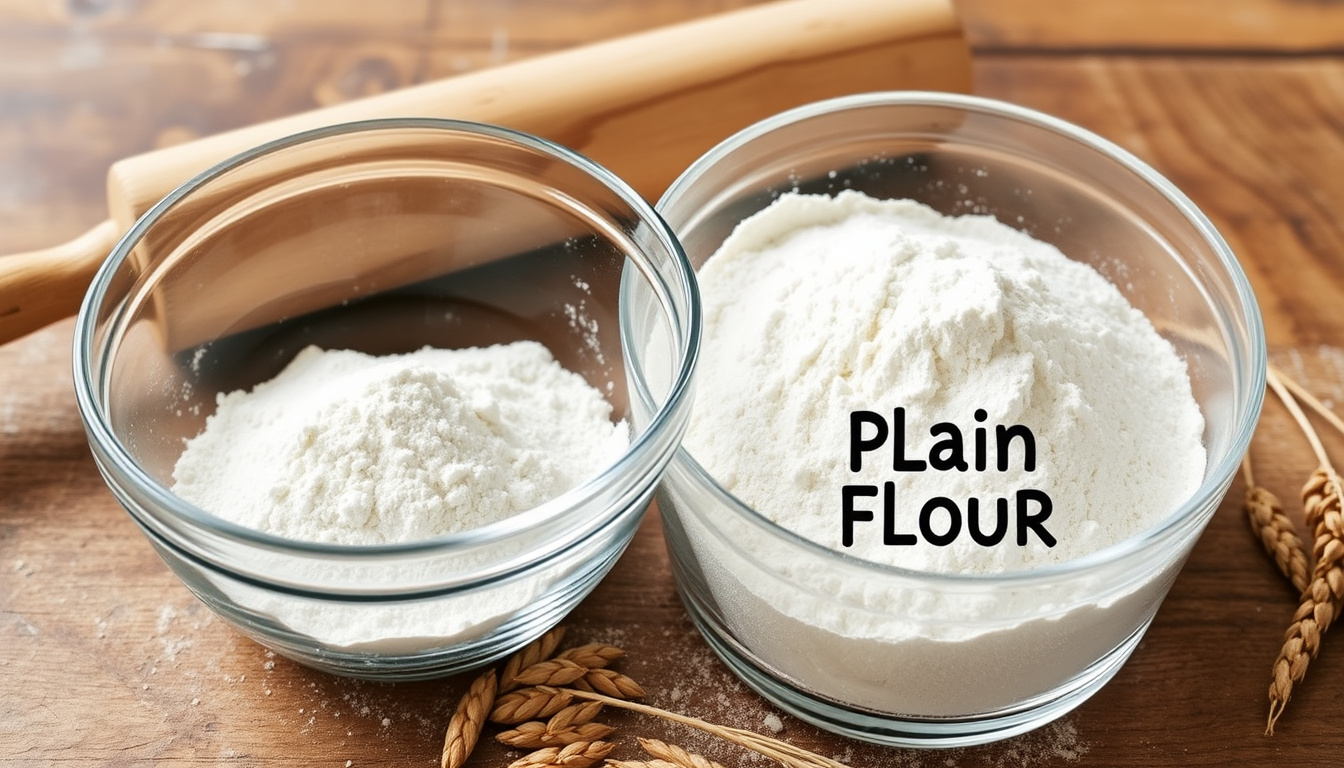
If you’ve ever tried a UK baking recipe in your American kitchen, you’ve probably asked yourself: is ‘plain flour’ the same as ‘all-purpose flour’? The short answer is yes—with a few small twists in protein content, bleaching, and regional names that can actually change how your bake turns out.
Plain flour gluten content: 8-11% protein ·
All-purpose flour protein range: 9-12% ·
U.S. all-purpose vs U.K. plain flour difference: minimal (0-1% protein variance) ·
Self-raising flour raising agent: contains baking powder ·
Gluten-free flour gut-friendly recommendation: brown rice flour (low FODMAP) ·
Ireland’s cream plain flour protein: 8-10%
Quick snapshot
- Plain flour and all-purpose flour are interchangeable in most recipes (protein variation <2%) Bonni Bakery (specialist baking blog)
- Ireland uses the term ‘cream plain flour’ for all-purpose flour In an Irish Home (Irish food blog)
- SIBO diets avoid high-FODMAP flours like wheat and rye In an Irish Home (Bonni Bakery (specialist baking blog))
- Whether Odlum’s cream plain flour consistently contains low-level raising agent In an Irish Home
- Flour naming differences between the U.S., U.K., and Ireland emerged from separate milling histories in the early to mid‑20th century Bonni Bakery and In an Irish Home
- SIBO-friendly flours include brown rice, quinoa, buckwheat, and coconut flour In an Irish Home
Six key differences, one pattern: the naming is the main variation, not the flour itself.
| Attribute | Value |
|---|---|
| Protein range all-purpose/plain | 8-12% |
| Self-raising vs plain difference | Self-raising has added baking powder |
| Ireland equivalent name | Cream plain flour |
| Top SIBO-friendly flour | Brown rice flour |
| Irish soda bread traditional flour | Cream plain flour (low protein) |
| U.S. all-purpose closest UK match | Plain flour |
Is plain flour the same as all-purpose flour?
Protein content comparison
- U.S. all-purpose flour protein range: 8-11% (What’s Cooking America (culinary reference))
- U.K. plain flour: 9-10% protein (Goodwoods (baking ingredient specialist))
- U.S. all-purpose is often a blend of hard and soft wheat and may be bleached (What’s Cooking America)
Regional naming variations
- In the U.K., ‘plain flour’ is the standard term for all-purpose wheat flour without raising agents (Panasonic Experience Fresh (home baking guide))
- Germany uses a numbered system (Weizen 550) for the same type (Panasonic Experience Fresh)
- U.S. flour is often bleached, which can soften gluten structure slightly (Goodwoods)
If you’re using a U.S. recipe in the U.K., swap in plain flour 1:1 and adjust liquid only if the dough feels too stiff. The protein difference rarely exceeds 2%.
Can I use plain flour instead of all-purpose flour?
Yes, plain flour (U.K.) and all-purpose flour (U.S.) are interchangeable in most recipes. The slight protein difference (1-2%) may affect very delicate pastries, but for cookies, muffins, and cakes the swap is 1:1. Bonni Bakery
The implication: for everyday baking—cookies, muffins, pancakes—the two flours are functionally identical. The catch is only in delicate pastries where a slightly higher or lower protein count can shift texture.
What is all-purpose flour in Ireland?
Cream plain flour definition
- Ireland calls all-purpose flour ‘cream plain flour’ (In an Irish Home)
- It typically contains 8-10% protein and no raising agent (In an Irish Home)
- Odlum’s brand may include a low level of raising agent, so check the label (In an Irish Home)
Irish flour brands
- Common brands: Odlum’s, Dunnes Stores own-brand, and other local millers (In an Irish Home)
- Irish wholemeal flour has about 14% protein and is used for traditional soda bread (In an Irish Home)
Some generic cream plain flours in Ireland may be blended with a low level of raising agent. If your recipe relies on plain (unleavened) flour, verify the label or buy from a trusted mill.
The trade-off: cream plain flour gives soda bread its tender crumb, but if you accidentally grab a bag with added raising agent, your cookies may spread too much.
What flour can I use instead of all-purpose flour?
Gluten-free alternatives
- Brown rice flour: closest texture mimic, works for most cakes and cookies (What’s Cooking America)
- Oat flour: mild flavour, good for muffins, but can be gummy if overmixed (Bonni Bakery)
- Almond flour: high fat content, best for shortbread-type cookies (Bonni Bakery)
Low-FODMAP options for SIBO
- Brown rice flour, quinoa flour, buckwheat flour, and coconut flour are considered low-FODMAP (In an Irish Home)
- Avoid wheat, barley, and rye flours because they are high in fructans (In an Irish Home)
For someone managing SIBO, the wrong flour can trigger bloating within hours. Brown rice and quinoa flours are the safest pantry swaps for all-purpose.
The pattern: gluten-free substitutes can replace all-purpose 1:1 by weight, but you may need a binding agent (xanthan gum) for structure.
What flour is good for SIBO diet?
Low-FODMAP flours
- Brown rice flour (most versatile and widely available) (In an Irish Home)
- Quinoa flour (higher protein, nutty taste) (Bonni Bakery)
- Buckwheat flour (despite name, not wheat; good for pancakes) (Bonni Bakery)
- Coconut flour (absorbs more liquid; use 1/4 cup per 1 cup all-purpose) (What’s Cooking America)
Avoiding high-fermentation flours
- Wheat, barley, and rye flours are high in fructans and ferment rapidly in the gut (In an Irish Home)
- Self-raising flour should also be avoided because it typically contains wheat (Goodwoods)
The implication: a SIBO-friendly pantry keeps brown rice flour as the go‑to all-purpose substitute, and reserves quinoa and buckwheat for variety.
What type of flour do they use in Ireland?
Cream plain flour for soda bread
- Traditional Irish soda bread uses cream plain flour (low protein, no raising agent) (In an Irish Home)
- The low protein content (8-10%) ensures the bread stays tender, not chewy (In an Irish Home)
Irish-style flour protein content
- Irish cream plain flour has lower protein than strong bread flour (12-14%) (Goodwoods)
- This makes it ideal for scones, biscuit-style baking, and soft pastries (Bonni Bakery)
The trade-off: if you use strong bread flour in a soda bread recipe, you’ll get a tough, dense loaf—not the classic Irish texture.
Is all-purpose flour plain or self-raising?
Self-raising vs plain flour leavening
- All-purpose flour (U.S.) is plain flour—it contains no raising agents (Bonni Bakery)
- Self-raising flour has baking powder and often salt added (Bonni Bakery)
- U.K. self-raising flour protein is 8-9%, U.S. self-rising is similar but less common (Goodwoods)
Recipe adaptation tips
- If a recipe calls for self-raising and you only have plain/all-purpose, add 1½ teaspoons of baking powder per cup of flour (Bonni Bakery)
- If a recipe calls for plain and you only have self-raising, omit any other leavening and reduce salt (Bonni Bakery)
The catch: self-raising flour is not interchangeable with plain in delicate cakes—the chemical balance can cause over‑rising or a metallic aftertaste.
What flour is closest to all-purpose?
Protein content match
- U.K. plain flour (8-11% protein) is the closest direct match to U.S. all-purpose (9-12%) (Bonni Bakery)
- Spelt flour (9-11% protein) also mimics all-purpose texture but has a nuttier flavour (What’s Cooking America)
Gluten-free closest substitutes
- A white rice flour and tapioca starch blend (70:30) replicates the structure of all-purpose flour (Goodwoods)
- Pre-mixed gluten-free all-purpose blends (e.g., Bob’s Red Mill) are formulated to substitute 1:1 (What’s Cooking America)
The pattern: for anyone without gluten issues, plain flour is the best substitute. For gluten-free baking, a commercial blend saves trial and error. For US baking standards, see our guide on Half Cup Butter In Grams – 113g US Baking Standard.
Comparison: U.S., U.K., and Ireland all-purpose equivalents
Three regions, three names, but the flour inside is nearly identical. The table below shows the slight differences in protein and processing.
| Region | Common name | Protein % | Raising agent | Typical uses |
|---|---|---|---|---|
| United States | All-purpose flour | 9-12% | None | Cookies, muffins, pancakes |
| United Kingdom | Plain flour | 8-11% | None | Cakes, biscuits, sauces |
| Ireland | Cream plain flour | 8-10% | None (except some brands) | Soda bread, scones |
| UK self-raising | Self-raising flour | 8-9% | Baking powder + salt | Sponge cakes, quick breads |
The takeaway: the true all-purpose universal flour is plain/cream plain, and self-raising should be treated as a different ingredient.
Specifications: Flour composition comparison
Six specs that matter when choosing a flour for a recipe.
| Property | U.S. all-purpose | UK plain | Ireland cream plain |
|---|---|---|---|
| Protein range | 9-12% | 8-11% | 8-10% |
| Bleached? | Often bleached | Unbleached by law | Unbleached |
| Fortified? | Not mandatory | Ca, Fe, B1, B3 added | Varies |
| Raising agent | None | None | None (except Odlum’s) |
| Best for | Cookies, muffins | Cakes, pastry | Soda bread, scones |
| Gluten development | Medium | Low to medium | Low |
| Substitute for | Plain flour 1:1 | All-purpose 1:1 | All-purpose 1:1 |
| Typical brands | King Arthur, Gold Medal | Allinson, Waitrose | Odlum’s, Dunnes |
What this means: the main spec to watch is protein—stick within 1-2% of what the recipe expects, and your bake will turn out fine.
What’s clear and what’s still uncertain
Confirmed facts
- Plain and all-purpose are interchangeable for most baking
- Ireland uses “cream plain flour” for all-purpose
- Brown rice flour is a low-FODMAP alternative
What’s unclear
- Whether Odlum’s cream plain flour consistently contains a low level of raising agent
- Whether Australian all-purpose flour matches U.S. or U.K. protein standards (no verified source)
- Whether cream plain flour from other Irish brands (e.g., Dunnes) may also contain trace raising agents (no verified source)
Expert perspectives
“White flour, otherwise known as plain or all-purpose flour.”
BBC Good Food (via Bonni Bakery)
“Cream Plain Flour, also known as All-Purpose Flour, typically has no raising agent.”
In an Irish Home (Irish food blog)
“Yes. It is about the gluten content.”
“There are at least seven effective substitutes for all-purpose flour.”
For anyone who bakes across continents, the naming of all-purpose flour versus plain flour is the biggest hurdle—not the flour itself. Once you know that Irish cream plain is the same product, and that a bag of self-raising is a different beast entirely, you can adapt any recipe. For those on a SIBO diet, the choice is clear: stock brown rice flour as your everyday all-purpose stand-in, or risk digestive discomfort. For a related technique using all-purpose flour, see our foolproof How to Make Hollandaise Sauce: Foolproof Blender Method.
Frequently asked questions
Can I substitute plain flour for all-purpose flour in any recipe?
Yes, plain flour (U.K.) and all-purpose flour (U.S.) are interchangeable in most recipes. The slight protein difference (1-2%) may affect very delicate pastries, but for cookies, muffins, and cakes the swap is 1:1. Bonni Bakery
What is the gluten content difference between plain and all-purpose flour?
Plain flour typically has 8-11% protein (gluten), while all-purpose flour ranges from 9-12%. The overlap means they function nearly identically. Goodwoods
Is self-raising flour the same as plain flour with baking powder?
Essentially yes. Self-raising flour has baking powder and sometimes salt already added. To make your own, add 1½ tsp baking powder per cup of plain or all-purpose flour. Bonni Bakery
What is the best flour to use for Irish soda bread?
Traditional Irish soda bread uses cream plain flour (8-10% protein). In the U.S., all-purpose flour works well; in the U.K., plain flour is a perfect match. Avoid strong bread flour as it makes the bread tough. In an Irish Home
Are there any flours that do not trigger SIBO symptoms?
Yes, low-FODMAP flours such as brown rice, quinoa, buckwheat, and coconut flour are generally safe. Avoid wheat, barley, and rye. In an Irish Home
How do I choose a flour substitute for all-purpose when baking gluten-free?
Use a blend of white rice flour and tapioca starch (70:30) or a commercial gluten-free all-purpose mix. Add xanthan gum if the recipe requires structure. What’s Cooking America
What is strong white flour used for?
Strong white flour (12-14% protein) is designed for yeast breads, pizza dough, and anything that needs a chewy, elastic crumb. It is not a substitute for plain or all-purpose flour. Goodwoods
Related stories





Thomas Webb leads fact-checking, source verification and corrections at Southern Monitor.