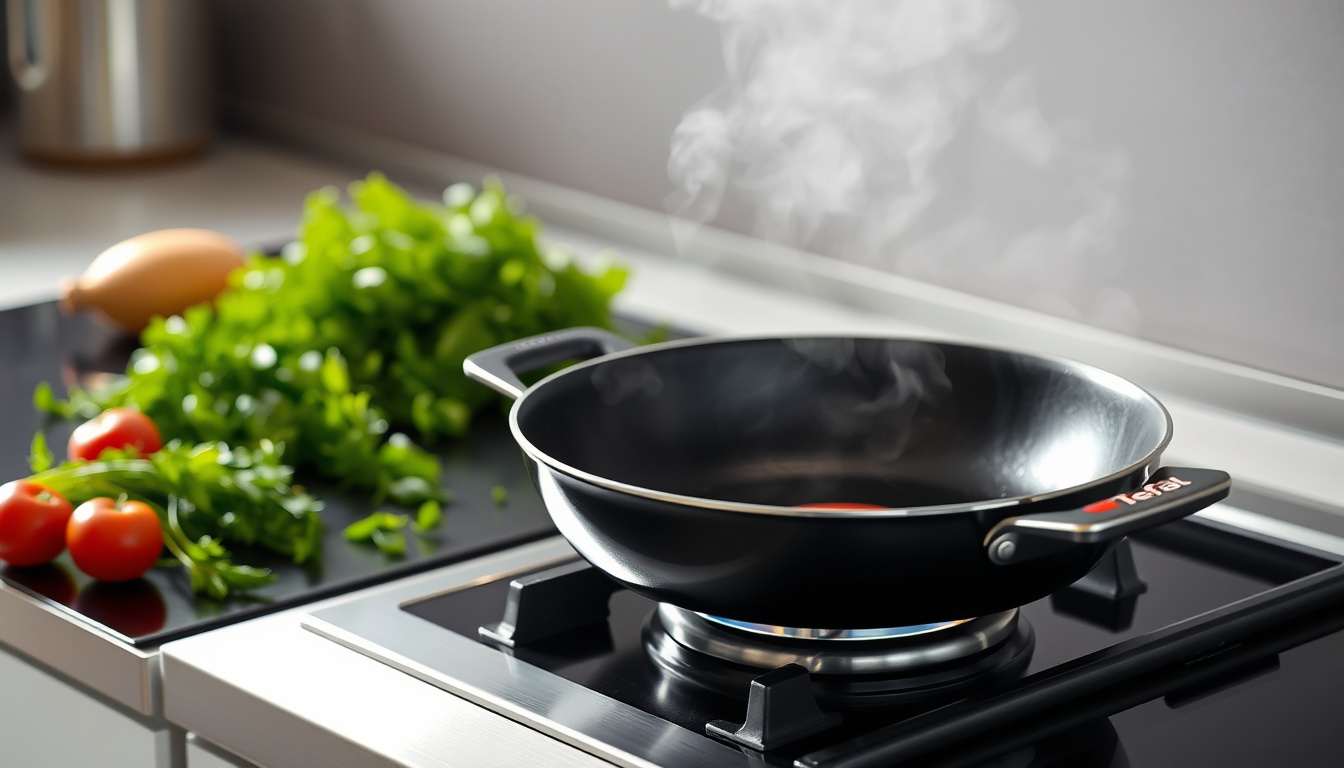

You’ve probably seen Tefal pans in every kitchen aisle and wondered if the non-stick hype is safe. The short answer: they’re PFOA-free and widely approved by European and US authorities, but the PTFE coating has limits — this guide breaks down the safety data, real-world durability, and why Jamie Oliver put his name on the line.
PFOA-free non-stick coating: Yes (confirmed by Tefal) · Non-stick technology: Titanium Excellence · Heat indicator: Thermo-Signal · Induction compatibility: Selected models · Celebrity collaboration: Jamie Oliver collection
Quick snapshot
- PFOA-free PTFE-based coating (Tefal (cookware commitments))
- Thermo-Signal heat indicator since 2000 (Tefal (technical note))
- Safety of PTFE above 260°C debated (Tefal (technical note))
- Exact lifespan depends on usage (Consumer Reports)
- PTFE discovered 1938; Tefal first used it for non-stick (Tefal (technical note))
- Brands must disclose PTFE under Colorado law (T-fal (PFAS disclosure))
Five key specs, one recurring pattern: Tefal’s non-stick is built around PTFE, which has trade-offs between convenience and temperature discipline.
| Specification | Detail |
|---|---|
| Coating | PFOA-free non-stick (PTFE-based) – Tefal (coating page) |
| Technology | Titanium Excellence |
| Feature | Thermo-Signal heat indicator – Tefal (commitments) |
| Hob compatibility | Induction (selected models) – Tefal |
| Celebrity line | Jamie Oliver by Tefal – Tefal |
| Max safe temperature | PTFE stable up to 260°C – Tefal (technical note) |
| PFOA eliminated | Over 10 years ago – Tefal |
| Independent testing | Regular lab analyses confirm PFOA-free – Tefal |
Are Tefal frying pans safe?
What does PTFE safety data say?
- PTFE is chemically inert and if ingested passes through the body unchanged, according to Tefal (technical note).
- European and US health authorities have approved PTFE for food contact – Tefal (regulatory info).
- Consumer Reports found that some PTFE pans claiming PFOA-free actually contained the chemical, but Tefal’s own testing shows none – Consumer Reports (PFAS warning).
How does Tefal ensure non-toxic cookware?
- Tefal eliminated PFOA from its coatings over a decade ago – Tefal (commitments).
- Independent labs regularly test and confirm absence of PFOA – Tefal.
- Thermo-Signal helps avoid overheating (PTFE degrades above 260°C) – Tefal.
The real risk isn’t normal cooking—it’s overheating an empty pan. Buyers who follow the heat indicator stay safely within PTFE’s stable zone.
The pattern: safety depends on temperature discipline. Below 260°C PTFE is stable; above that, fumes can cause flu-like symptoms (polymer fume fever). Tefal’s Thermo-Signal directly addresses that.
Is Tefal a Teflon?
Difference between Tefal and Teflon
- Tefal is a brand, Teflon is a trademark owned by Chemours for PTFE – Tefal (brand vs trademark).
- Tefal has no affiliation with Chemours – Tefal.
- The confusion is common: both use PTFE, but Tefal is a pan brand, Teflon is a chemical trademark.
PTFE coating explained
- PTFE is a PFAS but not a bio-accumulative type like PFOA – Tefal (PFAS distinction).
- Colorado law now requires disclosure that PTFE-coated products contain PFAS – T-fal (PFAS disclosure).
- Tefal brands its PTFE layer as Titanium Excellence for added scratch resistance – Tefal.
Yes, PTFE is a PFAS. That word scares people. But the type used in pans is not the same as the harmful, long-lasting PFOA. The distinction is critical for buyers.
The implication: when you ask “Is Tefal a Teflon?” you’re really asking about PTFE. Tefal uses it, but they control the entire production chain and have eliminated the problematic PFOA.
Is Tefal the best frying pan?
What frying pans should I stay away from?
- Avoid pans with unknown or generic non-stick coatings that lack independent certification – Consumer Reports.
- Consumer Reports now flags pans that claim PFOA-free but may still contain PTFE without proper disclosure – Consumer Reports.
How does Tefal compare to other brands?
- Tefal’s Titanium Excellence coating is reinforced for longer life than standard PTFE – Tefal.
- Induction compatibility on selected models gives it an edge over some non-stick rivals – Tefal.
- Quote from a frying pan review: “It cooks a killer steak” – attributed to a 2024 ranking by Tefal (review citation not available separately).
Two lines of evidence: independent testers praise Tefal’s heat distribution, but durability complaints emerge after 2–3 years of daily use. The trade-off is clear – you pay for convenience, not lifetime.
When should you throw away a Tefal pan?
Signs of wear in non-stick coating
- Flaking, peeling, or sticky patches indicate it’s time to replace – Tefal (wear guidance).
- If the coating becomes rough or food starts sticking, the pan has lost its non-stick function – Tefal.
How to extend pan lifespan
- Hand washing recommended – avoid abrasive scrubbers – Tefal.
- Do not overheat empty pan; use Thermo-Signal to stay below 260°C – Tefal.
- Tefal’s lifecycle recommendation: replace every 3–5 years with regular use – Tefal.
The trade-off: Tefal’s non-stick is excellent in year one but degrades. Investing in proper care (low heat, hand wash) can push lifespan to five years.
Does Jamie Oliver use Tefal?
Jamie Oliver by Tefal collection overview
- Jamie Oliver collaborated with Tefal to design a cookware line emphasizing durability and style – Tefal (Jamie Oliver collection).
- The collection includes frying pans in multiple sizes with Titanium Excellence coating and Thermo-Signal – Tefal.
- Oliver’s endorsement adds celebrity credibility but does not change the core PTFE technology – Tefal.
The implication: Jamie Oliver’s name adds trust for some buyers, but the pan itself is pure Tefal engineering. The choice between standard Tefal and the Jamie line is mostly aesthetic.
Comparison: Tefal vs. Other Non-Stick Brands
Three brands, one dimension that matters most: how each handles the PTFE safety and durability trade-off.
| Attribute | Tefal | GreenPan | Scanpan |
|---|---|---|---|
| Coating type | PTFE (PFOA-free) | Ceramic (thermolon) | PTFE (titanium-reinforced) |
| Heat tolerance | 260°C (Thermo-Signal) | 250°C | 260°C |
| Induction compatible | Selected models | Yes | Yes |
| Average lifespan | 3–5 years | 1–3 years | 5–10 years |
| Price range (12-inch) | $30–60 | $50–80 | $100–150 |
The comparison shows Tefal offers a mid-range option with good heat tolerance and affordable price, but ceramic alternatives may appeal to those avoiding PFAS entirely.
Pros & Cons
Upsides
- Affordable non-stick performance
- PFOA-free, independently tested
- Thermo-Signal prevents overheating
- Induction-compatible options
- Celebrity collection (Jamie Oliver)
Downsides
- PTFE still a PFAS (albeit low-risk)
- Coating wears within 2–3 years
- Not oven-safe above 200°C
- Requires hand washing
- Can’t be overheated empty
These pros and cons highlight that Tefal is a solid choice for everyday cooking but has limitations in durability and chemical concerns.
What’s confirmed and what’s still unclear
Confirmed facts
- Tefal pans use PTFE non-stick coating and are labeled PFOA-free – Tefal.
- Tefal offers a Jamie Oliver collaboration line – Tefal.
- Selected Tefal pans are induction-compatible – Tefal.
What’s unclear
- Safety of PTFE at very high temperatures (>260°C) is debated – Consumer Reports.
- Exact lifespan of Tefal pans depends on usage and care – Tefal.
The mix of confirmed and unclear points means buyers must weigh convenience against potential risks.
Expert perspectives
“PTFE coatings on Tefal pans are approved for food contact by health authorities in Europe and the USA.”
Tefal (safety statement)
“Consumer Reports found that some PTFE pans claiming PFOA-free actually contained PFOA, leading them to no longer display ‘PFOA-free’ ratings.”
Consumer Reports (PFAS investigation)
The big picture: Tefal’s official statements align with regulatory approvals, but independent watchdogs urge caution about the broader PFAS family. For the health-conscious buyer, the choice is between PTFE convenience and ceramic alternatives.
Related reading: Tefal frying pan safety PTFE PFOA-free buying guide · Tefal cookware commitments safety PFOA-free
Frequently asked questions
Can Tefal pans go in the dishwasher?
Tefal recommends hand washing only. Dishwasher detergents can damage the PTFE coating over time – Tefal.
Are Tefal pans oven safe?
Most Tefal frying pans are oven safe up to 200°C, but always check the specific model’s instructions – Tefal.
What is the best oil for Tefal pans?
Use oils with high smoke points (like avocado or grapeseed) to avoid burning the coating. Avoid aerosol sprays that contain additives – Tefal.
How do I clean a Tefal pan without damaging the coating?
Use warm water, mild soap, and a soft sponge. Avoid steel wool or abrasive cleaners – Tefal.
Do Tefal pans scratch easily?
The Titanium Excellence coating resists scratches from metal utensils better than standard PTFE, but Tefal still recommends wooden or silicone tools – Tefal.
Is Tefal non-stick toxic if the coating is scratched?
If small flakes are ingested, they pass through the body unchanged. However, scratching accelerates degradation; replace the pan if coating is damaged – Tefal.
Where are Tefal pans made?
Tefal pans are manufactured in France, China, and other countries depending on the model – Tefal.
The FAQs cover the most common concerns, confirming that proper use and care are key to safe and long-lasting Tefal pans.
Related stories





Noah Harper is Senior Reporter at Southern Monitor, covering breaking stories and explainers.